Civilizational Decline Cannot Be Stopped
In the late stages, the ability to even perceive decline weakens because the cultural categories required to sense the loss are gone.

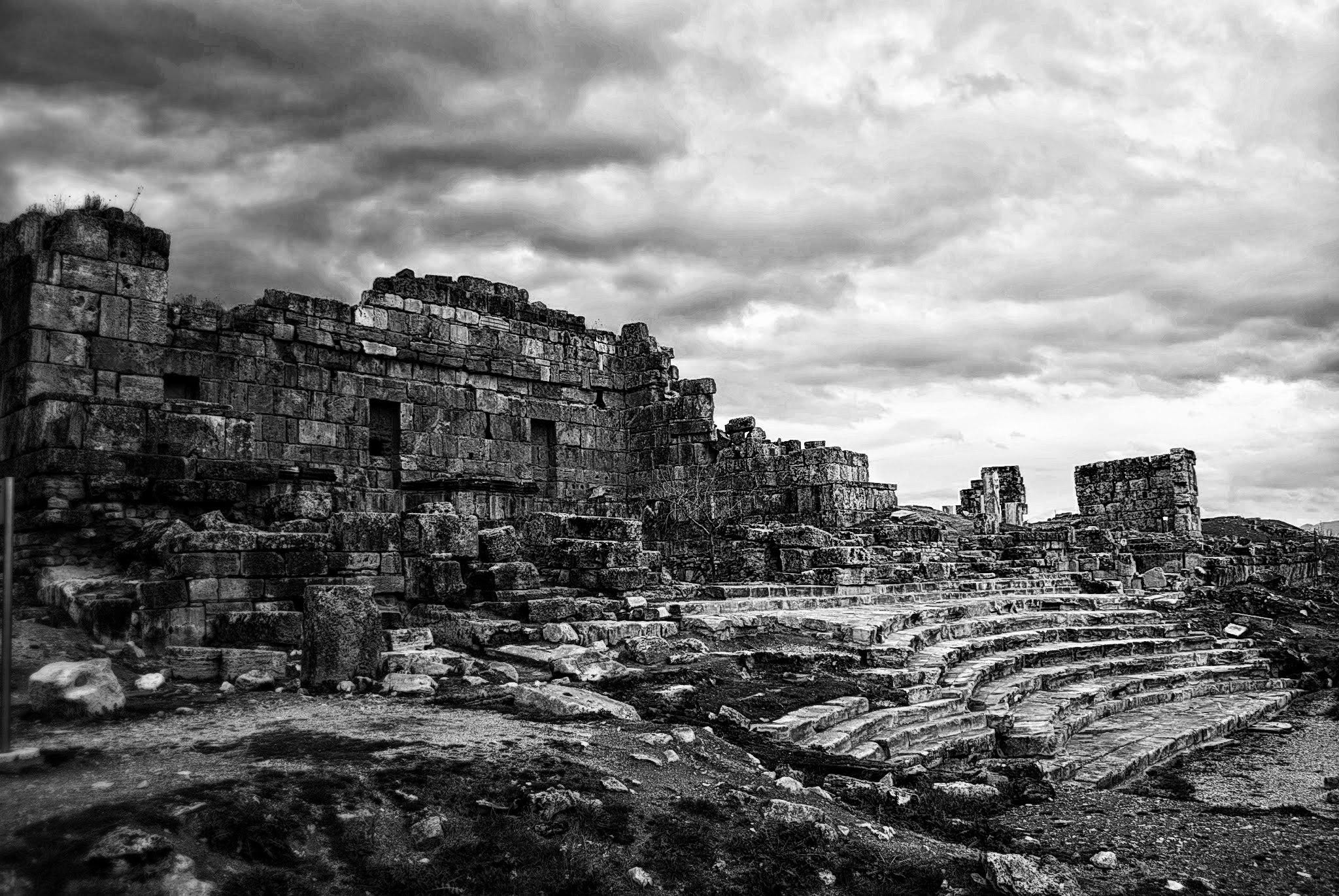
Oswald Spengler’s Decline of the West was a bestseller when it was published just over 100 years ago. It was a bombshell dropped into a Western world reeling from World War I. Today, Spengler remains mostly relegated to the fringes of contemporary discourse, seen more as curiosity than prophet.
This, of course, is entirely in line with his theories. In the late phases of a civilization, the ability to even perceive decline weakens, because the very cultural categories required to feel the loss are gone. Benchmarks of what even constitutes civilization progressively contract, and each contraction becomes normalized.
The Roman historian Tacitus lamented the Roman Empire’s loss of what he perceived as the noble virtues and liberty of the vanished Republic. Some 250 years later, much further down the path of decline, the historian Ammianus Marcellinus sounded quite a bit like Tacitus in tone, but his criticisms of military incompetence, poor governance, and corruption make no reference to the long-lost Republic. By his time, the imperial worldview was seen as normal and legitimate. Whereas Tacitus measures against the Republic, Ammianus Marcellinus measures only against notions of administrative competence. That is a civilizational narrowing of reference points.
At some point there is a firm break, and that is where historians draw the line. Tacitus mourned the loss of republican virtue, Ammianus saw corruption and barbarization in the late empire, but it was Augustine who then came along and rejected the sack of Rome as even being meaningful, since his categories were theological rather than civilizational. At this point, the ability to even perceive “civilizational loss” in Roman terms had evaporated.
The defining political slogan of our era is Make America Great Again, an acknowledgement that something has slipped. But what is the vision of America that the MAGA movement seeks to restore? Certainly not the young republic’s austere constitutional virtue as embodied by the likes of James Madison or Alexander Hamilton. That world is not only permanently lost but entirely unintelligible to today’s culture. Instead, MAGA looks back to the post-World War II boom era of a rising middle class, mostly homogenous population, and American global dominance—the greatest heights intelligible to us. But even the America of 1950 would have been unrecognizable to the Founding Fathers, who would have viewed it as already deeply compromised.
The American conservative establishment has mostly accepted the empire and the underlying economic system that goes with it. This cohort is scarcely aware that there was once an older, pre-capitalist Right. The famous last page of F. Scott Fitzgerald’s The Great Gatsby is a lament for the denuded land, now commercialized and debased: ”Its vanished trees, the trees that had made way for Gatsby’s house, had once pandered in whispers to the last and greatest of all human dreams.”
Fitzgerald felt the spiritual cost of modern capitalism and longed for deeper and older forms of meaning that were dissolving as the country ploughed full speed ahead into an increasingly brash and materialist ethic. Fitzgerald was elegiac about this loss; subsequent generations never debated the point because the “vulgarity and meretricious beauty” described by Fitzgerald had been normalized. To even reference the world Fitzgerald watched pass into oblivion is now quaint.
Where American decline is invoked in today’s mainstream discourse it is largely framed in economic terms, often in losing out to China. Whereas Fitzgerald saw capitalism as fraying the deeper civilizational fabric, today’s commentators are preoccupied with the decline within capitalism itself. They see America’s financialized and deindustrialized economy as a deviation from the vigorous capitalism of yesteryear. The shift is from criticism of the system to criticism within the system.
The path of decline is thus paved with ever shifting benchmarks. As prior benchmarks recede from historical memory, they become unintelligible and therefore irretrievable. Spengler was categorical in his belief that decline is a one-way street: cultures go through a dynamic and exuberant spring, mature into the high classicism of summer, before eventually succumbing to a senile and desiccated winter. There is no road back. What gives this process its feel of inevitability is that at some point what has been lost is no longer even remembered. The new circumstances are perceived as normal. Spengler wrote: “One day the last portrait of Rembrandt and the last bar of Mozart will have ceased to be—though possibly a colored canvas and a sheet of notes may remain—because the last eye and the last ear accessible to their message will have gone.”
The overall trajectory, meanwhile, is often obscured by ideological battles that create the appearance of something substantial being at stake. What is at stake on the long downslope, however, is only intelligible within the civilizational borders of the current moment. That the borders themselves may have shifted radically in the direction of decline is outside the logic of the ideological divides of any given moment. Julius Evola, on trial after World War II, said: “My principles are only those that, before the French Revolution, every well-born person considered sane and normal.” Evola is saying that it’s not he who took up an extreme position, but it was the culture itself that shifted.
The following example may seem trite in a sweeping civilizational analysis, but it is telling. Notice how the debate over this year’s Super Bowl halftime show played out. The actual stadium show featured a performer named Bad Bunny, whose positions on immigration and gender, among other issues, place him in the progressive camp; Turning PointUSA (yes, the same TP USA that is trying very hard not to look into the murder of founder Charlie Kirk) offered a “pro-American” alternative lineup of patriotic, red-blooded country rockers on a flag-drenched stage.
To the culture-warriors of today, which halftime show you watched says a lot about your values and even your stance on American or even Western civilization. That the entire discussion is taking place within the context of a garish, media-saturated, mass-culture spectacle is not relevant to either side.
Spengler, though, would not have bothered to even distinguish between these left- and right-coded pop-culture memes. The ideological battles are always fought the whole way down, with both sides firmly convinced that they are upholding civilization in whatever diminishing form it is being perceived at the moment.
The erstwhile great powers of Europe are embarking on a re-armament program to counter the supposed threat from Russia. Europe’s feckless technocrats, unable to appeal convincingly to deeper sentiment, have nevertheless tried to frame this conflict in civilizational terms, arguing that “European values” need to be protected from a revanchist power.
But what exactly are these values? The European Union’s strength lies in its “liberal democracies and accountable, transparent political structures and decisions. Human and civil rights, universal suffrage, free elections, diversity of political parties, the separation of powers and the rule of law are fundamental pillars,” the European Economic and Social Committee tells us.
Never mind that Europe’s rulers espouse this while simultaneously opening their borders to millions whose commitment to embracing these values seems tenuous, to put it mildly; or that these rulers invoke democracy without defining the people in whose name they claim to rule. Of course even on its own terms Europe fails. It treats democracy with none of the reverence that a true civilizational pillar should elicit. Europe has in fact become decidedly undemocratic. But that it falls spectacularly short of its own standard is almost beside the point.
The heart of the matter is that these values do not extend beyond the procedural realm: they explain how Europe strives to manage its affairs—who gets to participate, how elections are held, how political power is supposed to be wielded—not what animates Europe in the deeper sense. The most dynamic civilization the planet has ever seen can conjure nothing more profound than setting fair rules of play.
As a civilizational benchmark, this set of norms rose to prominence about five minutes ago on the grand clock of history. None of these so-called values have anything to do with what made Europe flourish in the first place. Today’s European leaders could scarcely give account of what constitutes European civilization—assuming they believe such a thing exists outside of the managerial and bureaucratic conglomerate they preside over.
Given current signals from Brussels, it isn’t hard to imagine Europe becoming a battleground for restoring a more credible democratic process, one at least wrested from the clutches of the unelected bureaucrats at the European Commission. This would of course be a welcome correction. But it would be a battle fought entirely on ground that itself has already shifted: it would acknowledge the primacy of fair rules of play and would contest only the current fairness of them. That mass democracy itself is a late-stage phenomenon is a fact that scarcely comes into play because the older order has slipped beyond the veil of history. That world—the real Europe—is irretrievable for many reasons; once it has become unintelligible, there is truly no road back.
Spengler is a dispeller of many illusions. Those who would expend energy fighting the culture wars wherever they flare up, or who would seek salvation in navigating the current political system, would do well to step back and seek a broader perspective. Benchmarks already fatally compromised are easily mistaken for civilizational vitality. If we are to believe Spengler, the decline of Western civilization as we have known it cannot be reversed. Civilizational flowering is an organic and unconscious phenomenon. By the time myth and meaning must be consciously manufactured or maintained, the organic force is spent.
But that does not mean nothing can be done. The actual battleground lies elsewhere. This is a theme I will return to in future essays, where I will lay out what actually can and should be fought for.
Cover photo: Antonio Cristofaro
European Values like bombing a nation into submission because it refused to be torn apart and then taking an integral part of that nation and illegally declaring it independent in order to have a NATO military colony.
I am talking about Yugoslavia/Serbia and Kosovo.
Danish tears about Trump taking their sacred Greenland brought the hypocrisy of its final conclusion.
The Danes were the first to recognize Kosovo’s independence and the first to cry about how taking Greenland was illegal against international law.
The EU is so corrupt and full of shit that it has no concrete connection to anything legal or wholesome.
We look forward to some guidance and white-pilling ... ... because the above black-pill is well-nigh incontestable:
"But that does not mean nothing can be done. The actual battleground lies elsewhere. This is a theme I will return to in future essays, where I will lay out what actually can and should be fought for."